
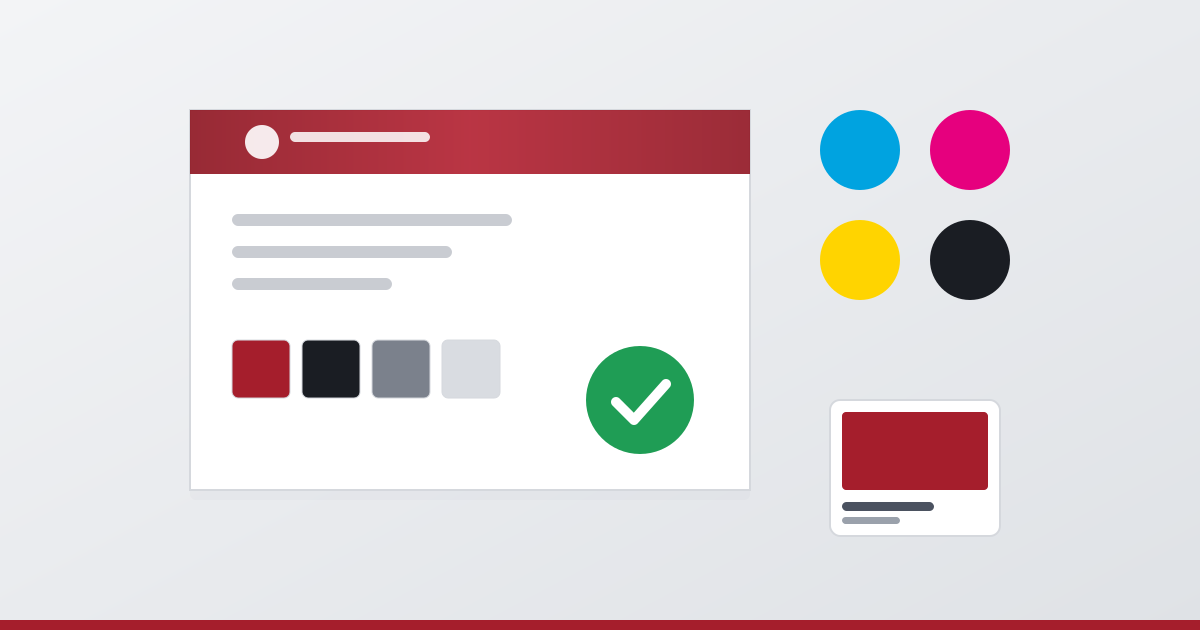
On printed foil, getting your brand colour right is one of the most visible parts of the packaging. That is why we ask for your approval of colours and text areas before production. In this article we explain why colours can look different and what to check at the approval stage.
Why does screen colour differ from print?
Screens display colour with light, using RGB. In print, colours are made with inks. Every screen is also calibrated differently, so the same file can look different on two screens. As a result, the colour you see on screen may not match the printed result exactly.
The shiny, metallic surface of aluminium foil can also change how colours look. The same colour may be perceived differently on paper and on foil.
CMYK and Pantone
CMYK
A printing method that builds colours by mixing cyan, magenta, yellow and black inks. Your artwork should be prepared in this colour mode.
Pantone
A colour matching system that identifies colours by code. If your brand colour is defined in Pantone, giving us the code means the colour is matched against the right reference.
What to check before you approve
- Colours: Make sure your brand colour is matched against the right reference.
- Text: Check that the product name, description and warnings are complete and correct.
- Layout: Check that the logo and text sit correctly within the foil size and print area.
- Legibility: Make sure small text is easy to read on the shiny foil surface.
How to reduce colour differences
- Prepare the file in CMYK colour mode from the start.
- State the Pantone codes for your brand colours both in the file and in your e-mail.
- If you have previously printed packaging you are happy with, share it as a reference.
- Take your time with the approval, rather than judging colour on a device whose screen settings you don't know.
The design you approve becomes the reference for production; a change is always easier to make before printing. For every step of file preparation, see How to prepare artwork for printed foil packaging.