
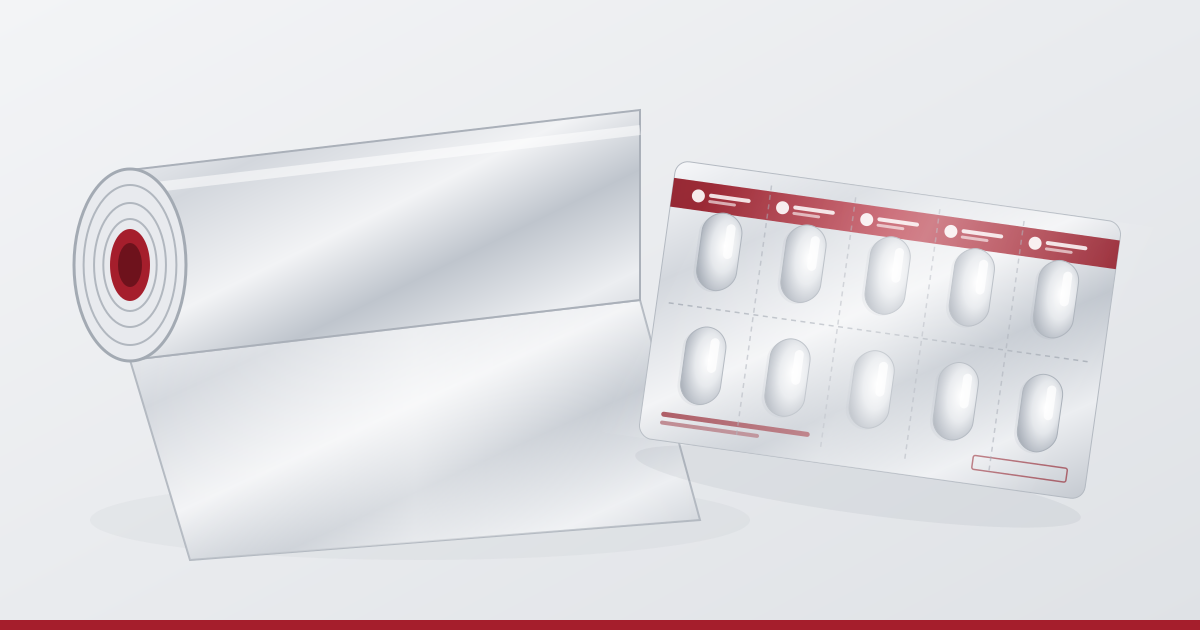
Most tablets and capsules come in blisters sealed on the back with a shiny foil. This is usually called pharmaceutical aluminium foil. In this article we explain what it does, what PTP means and how the foil is built.
What does pharmaceutical foil do?
Pharmaceutical foil covers the base of the blister and is sealed onto it, so that each tablet or capsule stays protected in its own cavity until it is used. Aluminium is widely used for this because it is a good barrier against moisture, light and air.
What is PTP foil?
PTP stands for "press-through pack". When the user presses on the cavity, the product breaks through the foil and comes out. The lidding foil used in this type of pack is called PTP foil. It has to protect the product reliably and still open in a controlled way when pressed.
The layers of the foil
Outer side
Carries the print and the coating that protects it. On plain foil, this side stays unprinted.
Aluminium
The body of the foil; it forms the barrier that protects the product from external factors.
Inner side
A heat-seal coating that bonds the foil to the blister base.
Printed or plain?
- Printed pharmaceutical foil: When the product name, manufacturer and usage information should stay visible once the blister is out of its box.
- Plain pharmaceutical foil: When this information is on the outer packaging, such as the box and leaflet.
We compare the two options in our article on printed vs plain aluminium foil.
What to consider when choosing pharmaceutical foil
- Compatibility with the base the foil will be sealed to
- How sensitive the product is to moisture, light and air
- Whether the foil size and format suit your packaging machine
- The regulations that apply to your product and your company's quality requirements
We cover the parts of a blister and the role of the lidding foil in more detail in What is blister lidding foil?